Available to download from January 2027
How can language learning follow situations, intentions and communication styles instead of isolated vocabulary lists?
The problem
Knowing a word's translation does not mean being able to use it naturally. The design starts with a situation, communication intention and suitable style.
The solution
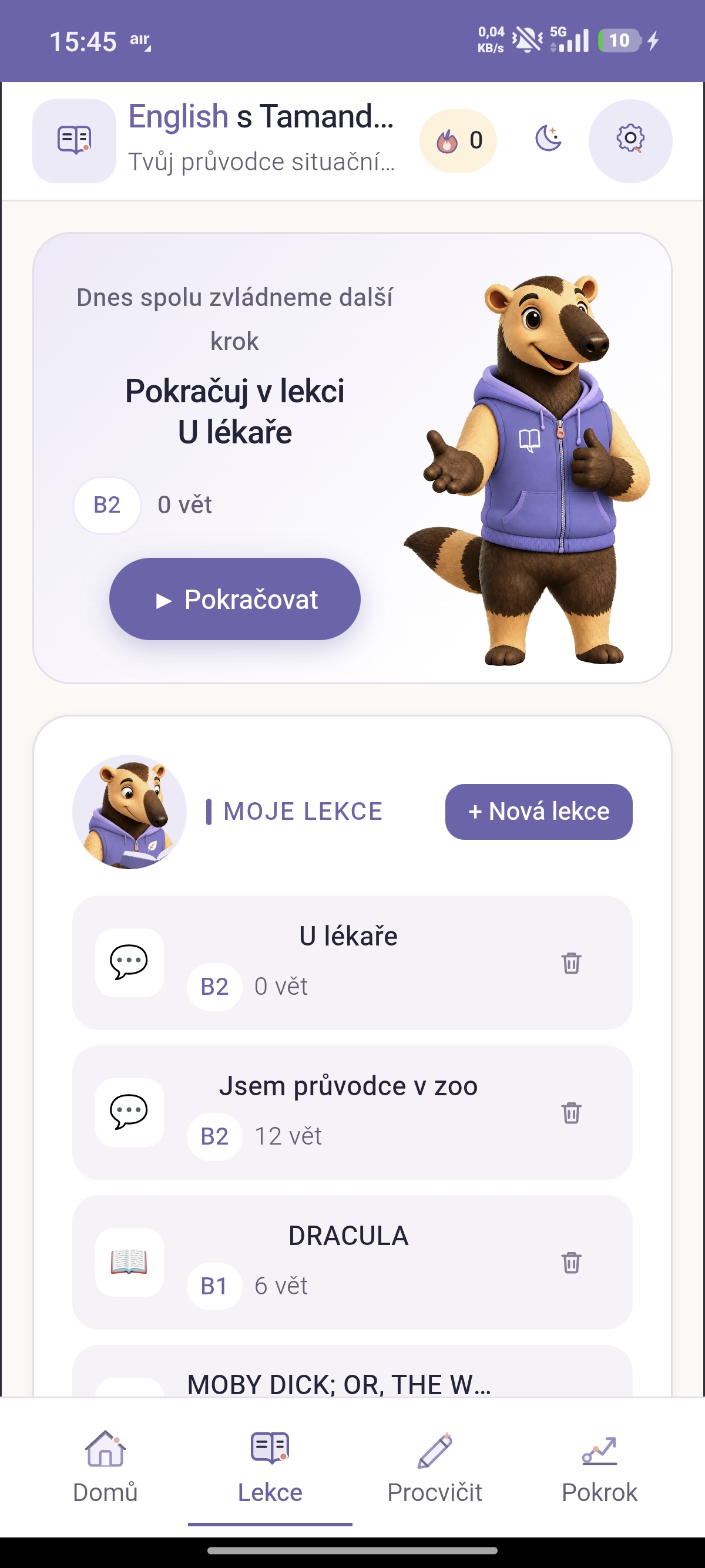
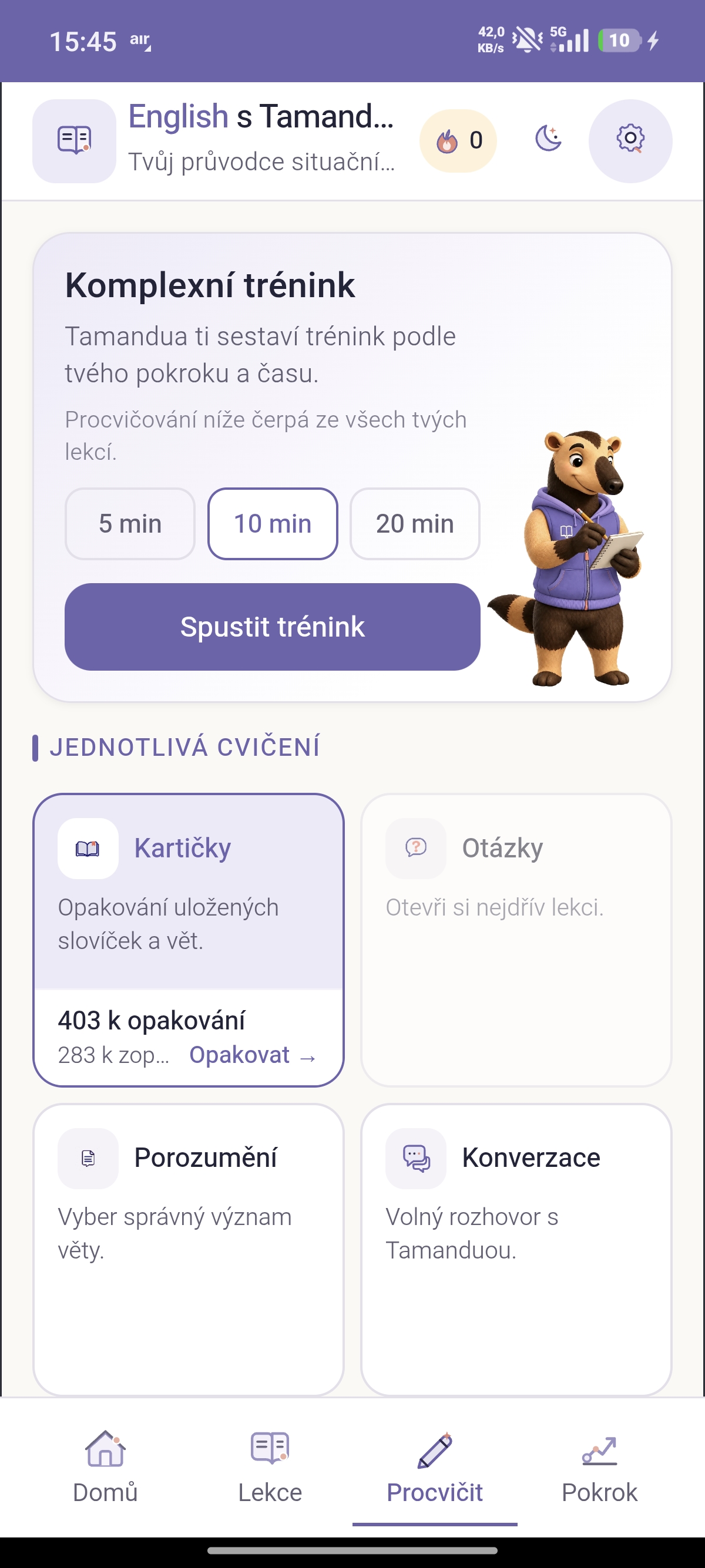
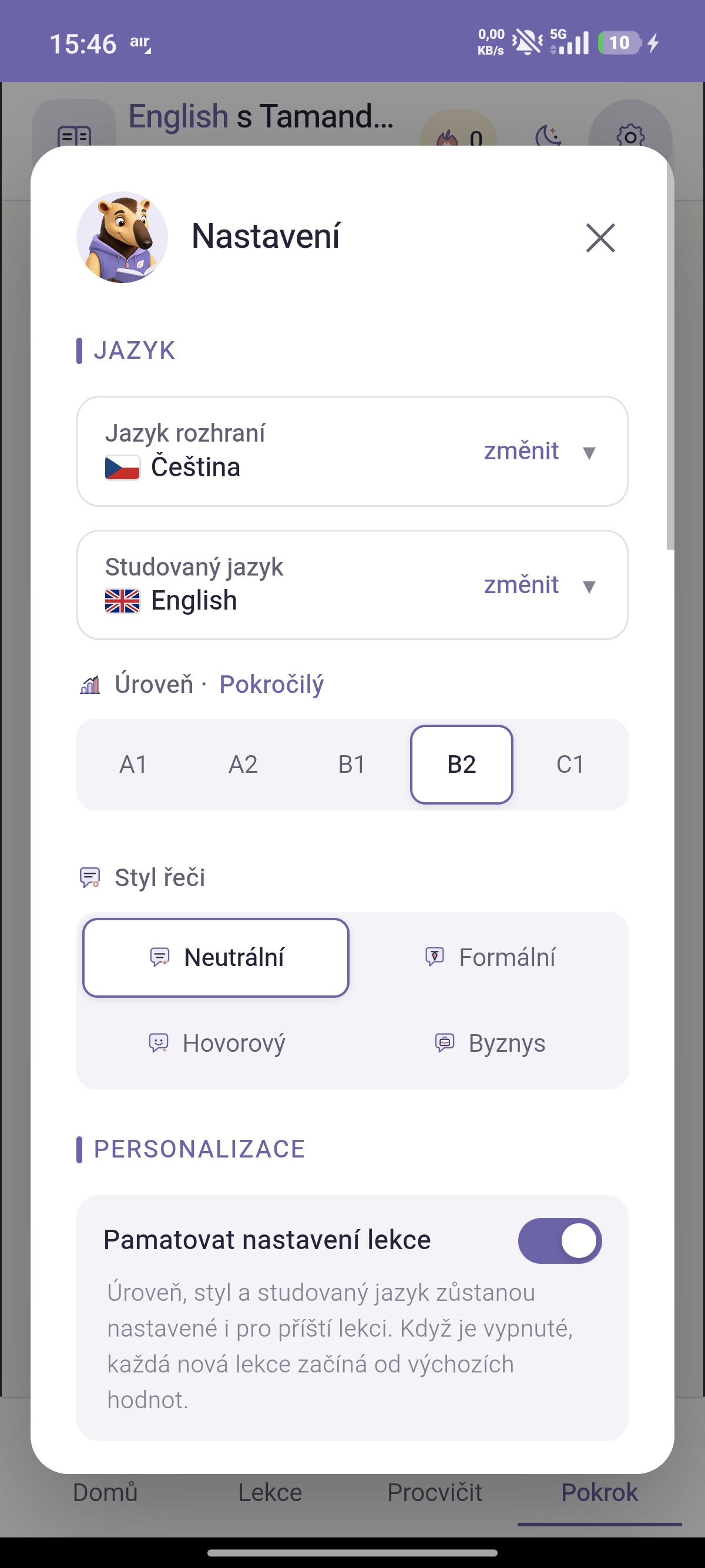
Users choose a situation and intention, explore related words and phrases, and revisit them in practice. They can encounter the same message in neutral, informal and professional versions.
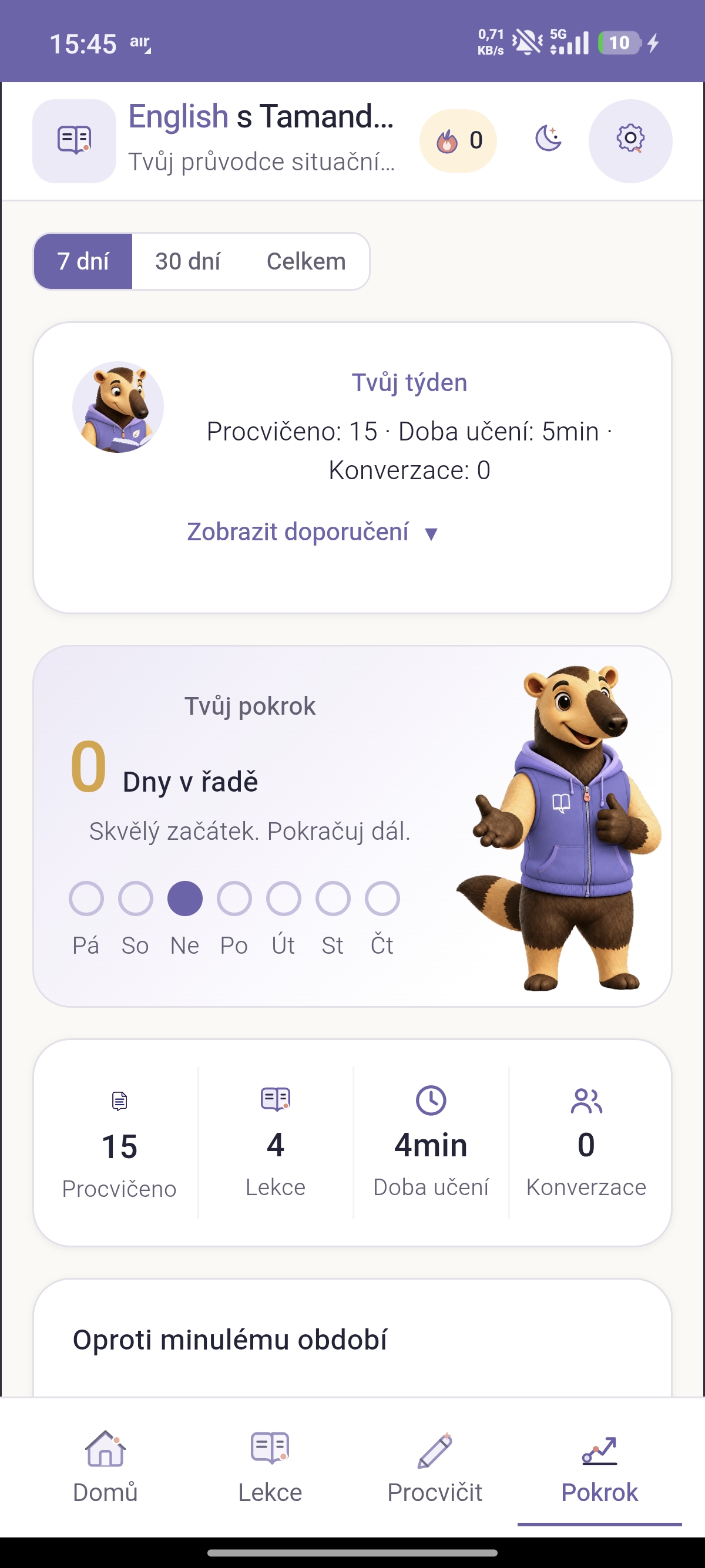
App screenshots
Technology and skills
Product concept · UX/UI · Content · Development · Localisation
Key decisions
Context comes before isolated lists. I design content and interface together so the next step reflects what people actually want to say. The web lesson builder sends a brief and the user's own API key through the Tamandua server to OpenAI, Google Gemini or Anthropic Claude. Returned content is checked in the browser; images are created separately using a second prompt.
[TO ADD: specific testing findings]
Next steps
Develop the links between content, practice and review. Check the language accuracy of generated content and the import of prepared lesson packages.
Design decision: a situation before a word list.
A lesson connects sentences, phrases and vocabulary to the same situation. I design content and interaction together, so users move from meaning to practice within one context.